Monday, April 19, 2021

Green Our Earth, Save Our Future Generations - Tree Planting Programme at Kinta Heights on 22 April 2021

April 19 2021: Lions Club of Perak Silver State and Ipoh City Watch will jointly organise the Tree Planting programme in conjunction with World Earth Day on 22 April 2021 starting at 8.30am.

The programme is supported by Ipoh City Council as part of its objective of planting 1,500 trees this year. This is also part of the Perak State aspiration of planting 100 million trees in Malaysia in 5 years.


Four trees will be planted here to provide shade to senior citizen. This is in addition to the 29 trees already been planted here by Ipoh City Council since it was build 30 years ago giving a total of 33 trees.

The tree planting effort forms part of World Earth Day 2021 with the theme "Restore Our Earth". We want our future generations to enjoy the natural environment besides helping to lower earth temperature so as to prevent disaster and hardship to poorly who are expected to be badly affected by serious impact of climate change in 30 years time. 


YB Sivasubramaniam A/L Athinarayanan, State Assemblyman for Buntong is our guest of honour. Also present include Clr Mohamad Iskandar Abdul Rahman who will also plant a tree. The other two trees will be planted by Clr. Dr. Richard Ng, who is also the President of Lions Club of Perak Silver State and Ipoh City Watch and Datuk Dr. Denison Jeyasooria, Head of the All-Party Parliamentary Group Malaysia (APPGM) Secretariat on sustainable development goals.


These trees planted will be given a QR code with serial number as follows:

Tree  # 1

Tree Serial Number: LCPSS-MBI/ 019/04/21

Family Name: Caesalpinia ferrea now known as Libidibia ferrea or Brazilian Iron Wood

Genus: Libidibia

Common Name: Brazilian Iron Wood

Height: 15m to 25m

Planted by: Clr. Dr. Richard Ng, Ipoh City Councillor cum President of Lions Club of Perak Silver State and President of Ipoh City Watch

Date Planted: 22 April 2021

Place: Pangsapuri Kinta Heights, Ipoh, Perak

Programme name: Green Our Earth Save Our Future Generations / World Earth Day 2021

Tree  # 2

Tree Serial Number: LCPSS-MBI/ 020/04/21

Family Name: Caesalpinia ferrea now known as Libidibia ferrea or Brazilian Iron Tree

Genus: Libidibia

Common Name: Brazilian Iron Wood

Height: 15m to 25m

Planted by: Datuk Denision Jeyasooria, Head of the All-Party Parliamentary Group Malaysia (APPGM) Secretariat  

Date Planted: 22 April 2021

Place: Pangsapuri Kinta Heights, Ipoh, Perak

Programme name: Green Our Earth Save Our Future Generations / World Earth Day 2021

Tree  # 3

Tree Serial Number: LCPSS-MBI/ 021/04/21

Family Name: Tecoma (Bignoniaceae)

Genus: Tecoma

Common Name: Tecoma

Height: 15m to 25m

Planted by: YB Sivasubramaniam A/L Athinarayanan, State Assemblyman for Buntong 

Date Planted: 22 April 2021

Place: Pangsapuri Kinta Heights, Ipoh, Perak

Programme name: Green Our Earth Save Our Future Generations / World Earth Day 2021


Tree  # 4

Tree Serial Number: LCPSS-MBI/ 022/04/21

Family Name: Tecoma (Bignoniaceae)

Genus: 

Common Name: Tecoma

Height: 15m to 25m

Planted by: Clr. Mohamad Iskandar Abdul Rahman, Ketua Bahagian PPBM Ipoh Barat

Date Planted: 22 April 2021

Place: Pangsapuri Kinta Heights, Ipoh, Perak

Programme name: Green Our Earth Save Our Future Generations / World Earth Day 2021


Description of Caesalpinia ferrea now known as Libidibia ferrea or Brazilian Iron Wood:


Most species of Caesalpinia s.l. have poorly defined growth rings, with isolated vessels arranged in radial multiples. Pitting between vessels is alternate and covered, and fibres are generally not divided by a septum. The axial (i.e., longitudinal) parenchyma varies from a winged shape to confluent, and is irregularly storied (i.e., layered), while the rays (perpendicular to growth rings) are of variable height and generally comprise a single or double cell width.[2] Libidibia in particular has layered longitudinal parenchyma and narrow homocellular (i.e., of uniform type) rays without crystals in the ray cells

Its wood is often used for making fingerboards for electric basses and guitars. It has a similar feel and similar tonal attributes to rosewood, but is harder and has a slightly lighter colour.[4] The wood may also be used for flooring, fancy furniture, and handgun grips. It is also known by the names morado, palo santo, caviuna, Brazilian ironwood, and Bolivian rosewood, though it is not actually rosewood.

In guitar making, pau ferro is mainly used for fingerboards and bridges. Some luthiers also use it for the back and sides of acoustic guitars. The Brazilian guitar company Giannini uses laminated pau ferro in many of their classical guitars.[5] Although similar in many ways to rosewood, pau ferro has slightly different qualities: Its colouration ranges from coffee brown to yellow brown and purple. The tonal characteristics are said to be between rosewood and ebony, with a slightly "snappier" sound, being "slightly brighter than rosewood but with the same depth and warmth".

Fender has utilized pau ferro on many of their instruments in recent years due to the increasing cost of rosewood due to CITES laws.[6] The Stevie Ray Vaughan Signature Fender Stratocaster was one of the company's first instruments to feature a pau ferro fingerboard.

https://en.wikipedia.org/wiki/Libidibia_ferrea

Description of Tecoma Tree:


Tecoma is a genus of 14[3] species of shrubs or small trees in the trumpet vine family, Bignoniaceae. Twelve species are from the Americas, while the other two species are African. The American species range from the extreme southern United States through Central America and the Antilles south through Andean South America to northern Argentina. The generic name is derived from the Nahuatl word tecomaxochitl, which was applied by the indigenous peoples of Mexico to plants with tubular flowers.[4] Trumpetbush is a common name for plants in this genus.[5]

https://en.wikipedia.org/wiki/Tecoma

Friday, April 2, 2021

Green the Earth, Save Our Future Generations at Taman Kledang Permai on 4-4-21 starting at 8am


 Lions Club of Perak Silver State with the support of Ipoh City Council (MBI) will be organising another tree planting programme to help "Green Our Earth and Save our Future Generations" by planting 6 more "Yellow Flame of the Forest" trees.

YBhg Dato' Hj. Rumaizi Baharin and Lions Club International 308B2 District Governor are the Guests of Honour. Also present include Orang Besar Jajahan Manjung, YDH Dato Shaharudin Hj Nawawi and other dignitaries. 

The tree planting programme is part of the 100 trees pledge made by MBI to assist Lions Club of Perak Silver State to support MBI's effort in planting 1,500 tress by end of 2021. It compliments te Perak State Givernment, Perak Lestari Programme to plant 1,000,000 trees by 2021.

6 Yellow Flame of the Forest (Pelthophorum pterocarpum) trees will be planted here to provide more shade, lower the earth temperature and increase carbon dioxide sequestration in line with MBI's Low Carbon City  mission 2030.

These trees will be given a QR code which will provide information to our future generations. The information provide include:


Name of tree, date planted, who planted, and features of the trees.

Details of Pelthophorum pterocarpum can be found in this link:

https://en.wikipedia.org/wiki/Peltophorum_pterocarpum

Description of Tree:

It is a deciduous tree growing to 15–25 m (rarely up to 50 m) tall, with a trunk diameter of up to 1 m belonging to Family Leguminosae and sub-family Caesalpiniaceaea. The leaves are bipinnate, 30–60 cm long, with 16–20 pinnae, each pinna with 20–40 oval leaflets 8–25 mm long and 4–10 mm broad. The flowers are yellow, 2.5–4 cm diameter, produced in large compound raceme up to 20 cm long. Pollens are approximately 50 microns in size.


Name of Tree: 
Yellow Flame Tree (Peltophorum pterocarpumThe fruit is a pod 5–10 cm long and 2.5 cm broad, red at first, ripening black, and containing one to four seeds. Trees begin to flower after about four years.


Tree  # 1

Tree Serial Number: LCPSS-MBI/ 013/04/21

Family Name: Fabaceae

Genus: Peltophorum

Common Name: copperpodyellow-flamboyantyellow flametreeyellow poinciana or yellow-flame

Height: 15m to 25m

Planted by: YBhg Puan Hjh Zuraina Binti Kamarul Ariff (MBI Secretary) on behalf od Datuk Bandar

Date Planted: 4 April 2021

Place: Padang Taman Kledang Permai, Ipoh

Programme name: Green Our Earth Save Our Future Generations

Tree  # 2

Tree Serial Number: LCPSS-MBI/ 014/04/21

Family Name: Fabaceae

Genus: Peltophorum

Common Name: copperpodyellow-flamboyantyellow flametreeyellow poinciana or yellow-flame

Height: 15m to 25m

Planted by: YBhg Dato' Yeoh Moh Chai, 308B2 District Governor 

Date Planted: 4 April 2021

Place: Padang Taman Kledang Permai, Ipoh

Programme name: Green Our Earth Save Our Future Generations


Tree  # 3

Tree Serial Number: LCPSS-MBI/ 015/04/21

Family Name: Fabaceae

Genus: Peltophorum

Common Name: copperpodyellow-flamboyantyellow flametreeyellow poinciana or yellow-flame

Height: 15m to 25m

Planted by: YDH Dato' Seribijaya Shaharudin Bin Hj Nawawi, Orang Besar Jajahan Manjung

Date Planted: 4 April 2021

Place: Padang Taman Kledang Permai, Ipoh

Programme name: Green Our Earth Save Our Future Generations


Tree  # 4

Tree Serial Number: LCPSS-MBI/ 016/04/21

Family Name: Fabaceae

Genus: Peltophorum

Common Name: copperpodyellow-flamboyantyellow flametreeyellow poinciana or yellow-flame

Height: 15m to 25m

Planted by: Clr Chan Soon Yip, Ahli Majlis MBI Zon 19 

Date Planted: 4 April 2021

Place: Padang Taman Kledang Permai, Ipoh

Programme name: Green Our Earth Save Our Future Generations


Tree  # 5

Tree Serial Number: LCPSS-MBI/ 017/04/21

Family Name: Fabaceae

Genus: Peltophorum

Common Name: copperpodyellow-flamboyantyellow flametreeyellow poinciana or yellow-flame

Height: 15m to 25m

Planted by: Lion Dr. Richard Ng, President Lions Club of Perak Silver State

Date Planted: 4 April 2021

Place: Padang Taman Kledang Permai, Ipoh

Programme name: Green Our Earth Save Our Future Generations


Tree  # 6

Tree Serial Number: LCPSS-MBI/ 018/04/21

Family Name: Fabaceae

Genus: Peltophorum

Common Name: copperpodyellow-flamboyantyellow flametreeyellow poinciana or yellow-flame

Height: 15m to 25m

Planted by: Lion Lim Kean Leng, LCIF District Coordinator

Date Planted: 4 April 2021

Place: Padang Taman Kledang Permai, Ipoh

Programme name: Green Our Earth Save Our Future Generations


Thursday, December 10, 2020

Program Green Our Earth, Save Our Future Generations with Lions Club of Perak Silver State and MBI

12 December 2020

Program Hijaukan Bumi, Selamatkan Generasi Akan Datang merupakan sebahgian daripada Program Penanaman 1 Juta Pokok Perak peringkat Majlis Bandaraya Ipoh Zon Pasir Pinji anjuran Lions Club of Perak Silver State dengan Sokongan Majlis Bandaraya Ipoh. Ia bertujuan untuk membantu menghijaukan bumi Ipoh khasnya dan Perak amnya bagi membantu mencapai misi Ipoh Bandar Raya Rendah Karban 2030.


Program ini akan dirasmikan YBhg Dato' Hj Rumaizi Bin Baharin, Datuk Bandar Ipoh. Turut hadir, YBhg Datin Seri Dr. Nomee Ashikin Binti Dato' Mohammed Radzi, Pengerusi Perak Foodbank yang juga peneraju Tindakan Iklim Perak.


Pada tahun 2021, MBI telah mensasarkan penanaman sebanyak 1,500 pokok di sekitar Majlis Bandaraya Ipoh. Di sekitar Majlis Bandaraya Ipoh kini mempunyai anggaran 400,000 pokok. Ini bermakna pada tahun 2030 kawasan Majlis Bandaraya Ipoh akan mempunyai 415,000 pokok.

Anggaran bilangan kereta di kawasan Majlis Bandaraya Ipoh pada tahun 2030 adalah sebanyak 160,000. Setiap kereta biasa akan menghasilkan gas CO2 sebanyak 4,600 kg setahun. Ini bermakna pada tahun 2030 jumlah CO2 yang dihasilkan kereta adalah sebanyak 736,000,000 kg CO2. 


Setiap pokok yang matang pada usia 10 tahun dengan anggaran berat 1,000kg akan menyerap sebanyak 3,670kg CO2. Ini bermakna 415,000 pokok dapat menyerap sebanyak 1,523,050,000 kg CO2.  

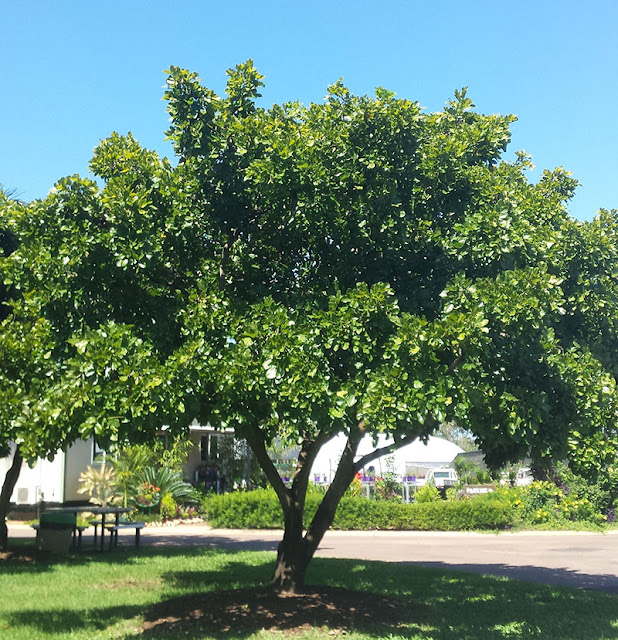
Pada tanggal 12 Disember 2020, sebanyak 6 pohon pokok Mempari (Pongamia Pinatta) akan ditanam di Padang Housing Trust, Ipoh. Program ini adalah hasil cadangan Ahli Majlis Dr. Richard Ng, selaku Ahli Majlis Zon Pasir Pinji. 

Tanggal 12-12-2020 dipilih supaya generasi akan datang terutama warga Taman Housing Trust dapat mengingati tarikh keramat ini di mana pokok perlu ditanam demi menangani perubahan cuaca yang kian ketara.

Setiap pokok yang ditanam ini mempunyai surat beranak yang dipautkan ke sistem EZ3 dengan code QR bagi membolehkan generasi akan datang mengetahui bukan sahaja siapa dan bila ianya ditanam tetapi juga jenis pokok dan faedahnya.

Pokok Pongamia Pinatta ini dipilih untuk dijadikan sebagai teduhan kepada warga emas yang sentiasa santai di kawasan ini.

Lions Club of Perak Silver State turut menyumbang 2 kerusi taman yang turut disumbang 3 kerusi taman oleh MBI.


Enam Pohon Pokok Mempari telah ditanam seperti berikut:

Pokok # 1

Tree Serial Number: LCPSS-MBI/ 007/12/20

Name of Tree: Mempari (Pongamia Pinatta or Milletia Pinatta)

Family Name: Fabaceae

Genus:  Milletia

Common Name: Sea Shore Mempari, Indian Beech or  Pongam Oil tree

Height: 6 m to 15m

Planted by: YBhg Dato' Rumaizi Bin Baharin, Datuk Bandar Ipoh

Date Planted: 12 December 2020

Place: Padang Housing Trust, Ipoh, Perak

Programme name: Green Our Earth Save Our Future Generations


Pokok # 2

Tree Serial Number: LCPSS-MBI/ 008/12/20

Name of Tree: Mempari (Pongamia Pinatta or Milletia Pinatta)

Family Name: Fabaceae

Genus:  Milletia

Common Name: Sea Shore Mempari, Indian Beech or  Pongam Oil tree

Height: 6 m to 15m

Planted by: YBhg Datin Seri Dr. Nomee Ashikin Binti Dato' Mohammed Radzi, Pengerusi Perak Foodbank

Date Planted: 12 December 2020

Place: Padang Housing Trust, Ipoh, Perak

Programme name: Green Our Earth Save Our Future Generations


Pokok # 3

Tree Serial Number: LCPSS-MBI/ 009/12/20

Name of Tree: Mempari (Pongamia Pinatta or Milletia Pinatta)

Family Name: Fabaceae

Genus:  Milletia

Common Name: Sea Shore Mempari, Indian Beech or  Pongam Oil tree

Height: 6 m to 15m

Planted by: YBhg Clr. Dr. Richard Ng, Ahli Majlis MBI merangkap Presiden Lions Club of Perak Silver State

Date Planted: 12 December 2020

Place: Padang Housing Trust, Ipoh, Perak

Programme name: Green Our Earth Save Our Future Generations


Pokok # 4

Tree Serial Number: LCPSS-MBI/ 010/12/20

Name of Tree: Mempari (Pongamia Pinatta or Milletia Pinatta)

Family Name: Fabaceae

Genus:  Milletia

Common Name: Sea Shore Mempari, Indian Beech or  Pongam Oil tree

Height: 6 m to 15m

Planted by: YBhg Dr. CK Yeoh, CEO AXG Industries Sdn. Bhd.

Date Planted: 12 December 2020

Place: Padang Housing Trust, Ipoh, Perak

Programme name: Green Our Earth Save Our Future Generations


Pokok # 5

Tree Serial Number: LCPSS-MBI/ 011/12/20

Name of Tree: Mempari (Pongamia Pinatta or Milletia Pinatta)

Family Name: Fabaceae

Genus:  Milletia

Common Name: Sea Shore Mempari, Indian Beech or  Pongam Oil tree

Height: 6 m to 15m

Planted by: YBhg Cik Girlie Lim Hong Lian, Pengerusi JPP1 Pasir Pinji merangkap Region 3 & 4 Chairman (Services), Lions Club international District 308B2 

Date Planted: 12 December 2020

Place: Padang Housing Trust, Ipoh, Perak

Programme name: Green Our Earth Save Our Future Generations


Pokok # 6

Tree Serial Number: LCPSS-MBI/ 012/12/20

Name of Tree: Mempari (Pongamia Pinatta or Milletia Pinatta)

Family Name: Fabaceae

Genus:  Milletia

Common Name: Sea Shore Mempari, Indian Beech or  Pongam Oil tree

Height: 6 m to 15m

Planted by: YBhg En Teh Chin Han, Pengerusi JPP2 Pasir Pinji

Date Planted: 12 December 2020

Place: Padang Housing Trust, Ipoh, Perak

Programme name: Green Our Earth Save Our Future Generations


Description:

Millettia pinnata is a legume tree that grows to about 15–25 metres (50–80 ft) in height with a large canopy which spreads equally wide. It may be deciduous for short periods. It has a straight or crooked trunk, 50–80 centimetres (20–30 in) in diameter, with grey-brown bark which is smooth or vertically fissured. Branches are glabrous with pale stipulate scars. The imparipinnate leaves of the tree alternate and are short-stalked, rounded or cuneate at the base, ovate or oblong along the length, obtuse-acuminate at the apex, and not toothed on the edges. They are a soft, shiny burgundy when young and mature to a glossy, deep green as the season progresses with prominent veins underneath.[5]

Flowering generally starts after 3–4 years with small clusters of white, purple, and pink flowers blossoming throughout the year. The raceme-like inflorescence bear two to four flowers which are strongly fragrant and grow to be 15–18 millimetres (0.59–0.71 in) long. The calyx of the flowers is bell-shaped and truncate, while the corolla is a rounded ovate shape with basal auricles and often with a central blotch of green color.[3][6]

Croppings of indehiscent pods can occur by 4–6 years. The brown seed pods appear immediately after flowering and mature in 10 to 11 months. The pods are thick-walled, smooth, somewhat flattened and elliptical, but slightly curved with a short, curved point. The pods contain within them one or two bean-like brownish-red seeds, but because they do not split open naturally the pods need to decompose before the seeds can germinate. The seeds are about 1.5–2.5 centimetres (0.59–0.98 in) long with a brittle, oily coat and are unpalatable to herbivores.[5][6]

Naturally distributed in tropical and temperate Asia, from India to Japan to Thailand to Malesia to north and north-eastern Australia to some Pacific islands;[1][3] It has been propagated and distributed further around the world in humid and subtropical environments from sea level to 1200m, although in the Himalayan foothills it is not found above 600m.[7] Withstanding temperatures slightly below 0 °C (32 °F) and up to about 50 °C (120 °F) and annual rainfall of 500–2,500 mm (20–100 in), the tree grows wild on sandy and rocky soils, including oolitic limestone, and will grow in most soil types, even with its roots in salt water.[8]

The tree is well suited to intense heat and sunlight and its dense network of lateral roots and its thick, long taproot make it drought-tolerant. The dense shade it provides slows the evaporation of surface water and its root nodules promote nitrogen fixation, a symbiotic process by which gaseous nitrogen (N2) from the air is converted into ammonium (NH4+, a form of nitrogen available to the plant). M. pinnata is also a fresh water flooded forest species as it can survive total submergence in sweet water for few months continuously. M. pinnata tree is common in Tonlesap lake swamp forests in Cambodia

Millettia pinnata is an outbreeding diploid legume tree, with a diploid chromosome number of 22.[6] Root nodules are of the determinate type (as those on soybean and common bean) formed by the causative bacterium Bradyrhizobium.


Uses:

Millettia pinnata is well-adapted to arid zones and has many traditional uses. It is often used for landscaping purposes as a windbreak or for shade due to the large canopy and showy fragrant flowers. The flowers are used by gardeners as compost for plants requiring rich nutrients. The bark can be used to make twine or rope and it also yields a black gum that has historically been used to treat wounds caused by poisonous fish. The wood is said to be beautifully grained but splits easily when sawn thus relegating it to firewood, posts, and tool handles.[7]

While the oil and residue of the plant are toxic and will induce nausea and vomiting if ingested, the fruits and sprouts, along with the seeds, are used in many traditional remedies.[8] Juices from the plant, as well as the oil, are antiseptic[medical citation needed] and resistant to pests. In addition M. pinnata has the rare property of producing seeds of 25–40% lipid content of which nearly half is oleic acid.[9] Oil made from the seeds, known as pongamia oil, is an important asset of this tree and has been used as lamp oil, in soap making, and as a lubricant for thousands of years. The oil has a high content of triglycerides, and its disagreeable taste and odor are due to bitter flavonoid constituents including karanjinpongamoltannin and karanjachromene.[8] It can be grown in rainwater harvesting ponds up to 6 m (20 ft) in water depth without losing its greenery and remaining useful for biodiesel production.[10]

The residue of oil extraction, called press cake, is used as a fertilizer and as animal feed for ruminants and poultry.[11]

Long used as shade tree, M. pinnata is heavily self-seeding and can spread lateral roots up to 9 m (30 ft) over its lifetime. If not managed carefully it can quickly become a weed leading some, including Miami-Dade County, to label the tree as an invasive species.[12] However this dense network of lateral roots makes this tree ideal for controlling soil erosion and binding sand dunes.[7]


Source: https://en.wikipedia.org/wiki/Millettia_pinnata


Kempen Penananam Sejuta Pokok Perak Ahli Majlis MBI Zon Pasir Pinji - Housing Trust

10 Disember 2020

Program Penanaman Sejuta Pokok "Green Our Earth Save Our Future Generations" anjuran Lions Club of Perak Silver State dengan Sokongan Majlis Bandaraya Ipoh Zon Pasir Pinji:

Tarikh: 12-12-2020

Tempat: Padang Housing Trust, Ipoh, Perak

Masa: 9.00 pagi hingga 10.30 pagi

Perasmian oleh: YBhg Dato' Hj. Rumaizi Bin Baharin, Datuk Bandar Ipoh


Monday, November 23, 2020

Urban forests battle heat and pollution

 23 November 2020 (The Star)


SEOUL, South Korea, has recently launched an urban forest project, hoping to lower city temperatures by up to 7°C. From Phoenix in the United States to Mumbai, India, and Paris, France, as cities try to combat pollution and improve air quality, urban forests are mushrooming.


In South Korea, Seoul residents are increasingly faced with intense summer heat. In the summer of 2018, temperatures went up to 39.6°C during the hottest part of the day. 

However, the capital’s geographical location has two things going for it – it’s overlooked by two mountainous massifs, Bukhansan to the north and Gwanaksan to the south. 
Now, Korean authorities have decided to take advantage of the cooling However, the capital’s geographical location has twothings going for it – it’s overlooked by twomountainous massifs, Bukhansan to the north andGwanaksan to the south.

Now, Korean authorities have decided to takeadvantage of the cooling properties of these relieffeatures to try to ameliorate future heat waves.

The Seoul Metropolitan Government plans to install “wind path forests” along the rivers and roads, tocreate cooling air corridors that will flow into the citycentre. The project will commence as soon as asNovember, and work will continue until the end of2021. The total cost? US$15mil (RM62mil).Wind-generating species such as pine and maple trees will beplanted along the water. Wild cherry and oak, knownfor their ability to purify the air and absorb and blockparticulate matter, will also be planted on paths linkingthe forested areas to the city centre.

Action plans in cities worldwide

The Seoul project is far from unique. In the UnitedStates, urban forests are being employed to helpcongested cities breathe. Boston has just closed arequest for proposals to design its urban forest plan,while on the West Coast, Los Angeles has plans toplant 90,000 trees by 2021.

In Phoenix, Arizona, the Tree and Shade Master Planwas passed in 2010 to transform the city and providemore shade and cleaner air. Phoenix has since speededup its efforts, planting over 4,500 trees per year tocreate more shade.

In Mumbai, India, authorities are trying to increaseurban forest cover as fast as possible. An initiative toplant 10,000 local species of trees, with the support ofDCB Bank, will use the Japanese Miyawaki technique– named for its inventor – of planting dense forests ofnative species, which allows the trees to grow up to ahundred times faster than usual.

Meanwhile in Paris, mayor Anne Hidalgo hasannounced plans for urban forests next to multiple citylandmarks including the Hotel de Ville, Paris’ city hall,the Opera Garnier and the Gare de Lyon. — AFP Relax news

Thursday, November 12, 2020

Yellow Flame of the Forest (Peltophorum Pterocarpum) at Jln Sultan Azlan Shah (Tiger Lane) Ipoh

11 Nov 2020

As we take a ride along Jln Sultan Azlan Shah from the junction of Jln Sultan Nazrin Shah to the junction of North-South Highway in Ipoh, a distance of of approximately 7km, you will be able to find 550 trees of the species Yellow Flame of the Forest or its scientific name, Peltophorum Pterocarpum.


These trees were planted along this protocol road approximately 30 years ago.  Several prominent building can be found along this road; the Istana Cempaka Sari, the official residence of the Mayor of Ipoh and the Royal Golf Club on one side and the bungalow house of Datin Janet Yeoh, the mother of our famous actress Tan Sri Michelle Yeoh ( James Bond and Crouching Tiger).


According to the notes in wikipedia:

It is a deciduous tree growing to 15–25 m (rarely up to 50 m) tall, with a trunk diameter of up to 1 m belonging to Family Leguminosae and sub-family Caesalpiniaceaea. The leaves are bipinnate, 30–60 cm long, with 16–20 pinnae, each pinna with 20–40 oval leaflets 8–25 mm long and 4–10 mm broad. The flowers are yellow, 2.5–4 cm diameter, produced in large compound raceme up to 20 cm long. Pollens are approximately 50 microns in size.


How much CO2 is being absorbed?

Base on the current size and height, each tree is estimated to weigh about 800kg.  A tree will absorb CO2 and convert it into carbon. This process is called carbon sequestration.

Each kg of tree can absorb approximately 3.46 kg CO2 per year. Thus the amount of CO2 absorbed by these 550 trees is approximately:

= 800 x 3.46 x 550 

= 152,240 kg of CO2

How many cars travel along this road?

Based on the estimation of 30 cars per km per minute for a period of 5 hours a day, there is an average of 15,000 cars per year travelling along this road. Each car generate 4,600kg of CO2 per year. Thus, the total amount of CO2 produced by these cars along this road is about 115,920,000kg.

Conclusion:

The amount of carbon absorption by these 550 trees is only 152,240kg per year

The amount of CO2 produced by cars along this road is 115,920,00kg per year

Hence, the percentage of CO2 absorbed by trees along this road = 0.13%

Discussion:

More needs to be done by all of us to help turn Ipoh into a low carbon city. This can be achieved through:

a. Planting more trees

b. Use public transportation

c. Car pool

d. Use Electric Cars

e. Cycle or walk more

d. Use low carbon emission transport