20 Feb 2025:
Mentoring Session on Ipoh Doughnut Economy organised by Sunway Planetary Health Centre in collaboration with Ipoh City Council.
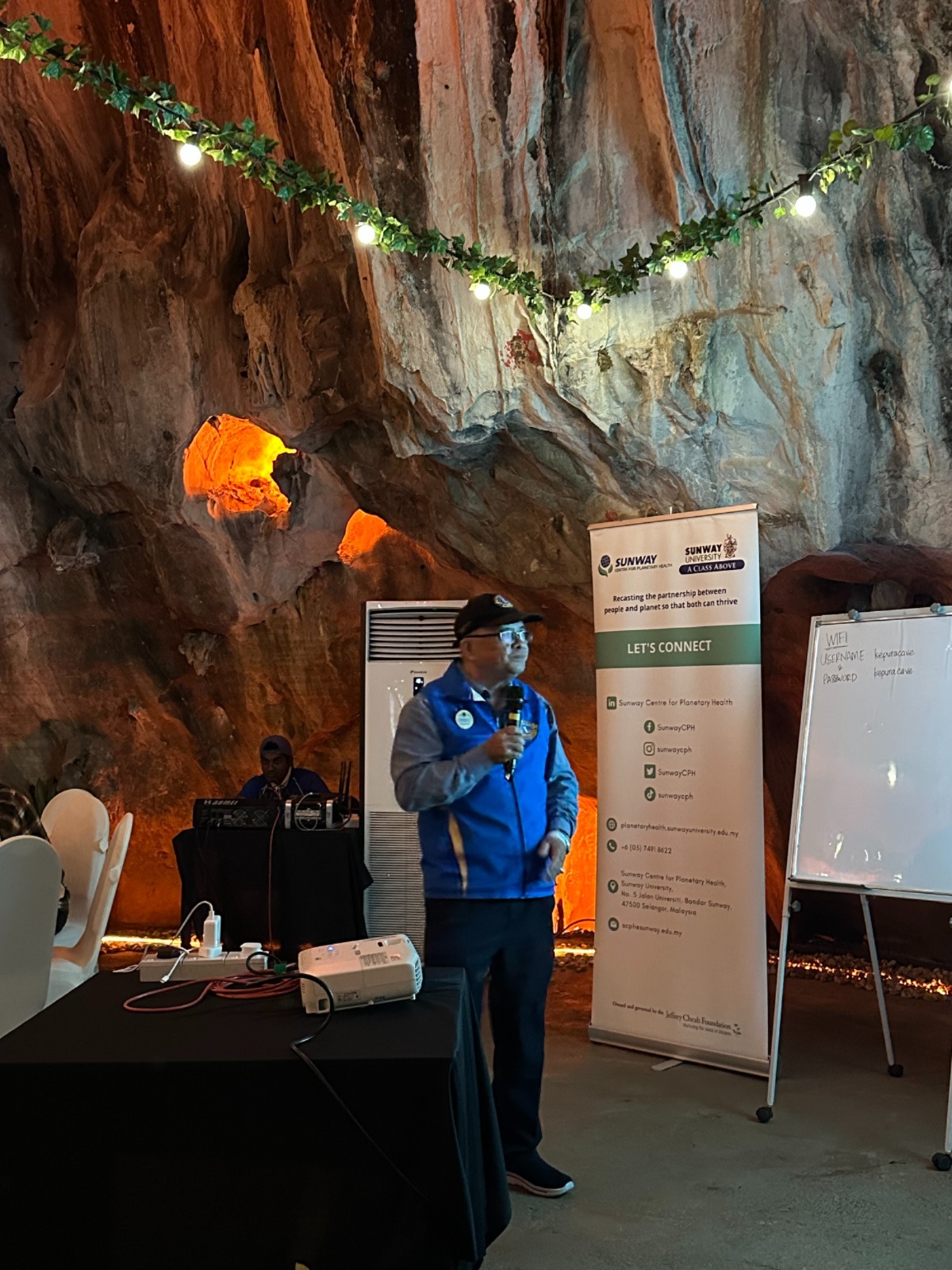
I am honoured to be invited to share my years of community service experience to 60 participants from NGOs and Civil Servants.
The Doughnut Economy is an economic model proposed by British economist Kate Raworth in her 2017 book Doughnut Economics: Seven Ways to Think Like a 21st-Century Economist. It presents a framework for achieving sustainable development by balancing human needs and planetary boundaries.
Concept of the Doughnut Model
The model is visually represented as a doughnut with two rings:
1. The Inner Ring (Social Foundation): Represents the minimum standards for human well-being, such as food, water, healthcare, education, and political participation. Falling below this leads to poverty and deprivation.
2. The Outer Ring (Ecological Ceiling): Represents the environmental limits we must not exceed, such as climate change, biodiversity loss, and pollution. Exceeding this causes ecological damage.
The safe and just space for humanity lies between these two rings, where human needs are met without over-exploiting the planet.
Key Principles of Doughnut Economics
1. Rethinking Growth – Moving beyond GDP as the main measure of success.
2. Regenerative Economy – Creating a circular economy that reduces waste and regenerates resources.
3. Redistributive Economy – Ensuring fair distribution of wealth and resources.
4. Embedded Economy – Recognizing that the economy exists within society and nature, not separate from them.
5. Systems Thinking – Understanding interconnectedness rather than linear economic models.
Practical Applications
Cities like Amsterdam, Brussels, and Copenhagen have adopted the Doughnut framework to guide policies on housing, energy, and sustainability.
Mooted by the Ipoh City Council (MBI), a total 21 area of focus or dimensions have been identified as follows:
SOCIAL FOUNDATION (12 Dimensions)
- Food
- Health
- Education
- Income and Work
- Housing
- Networks (transport, digital, community)
- Energy
- Water and Sanitation
- Peace and Justice
- Political Voice
- Social equity
- Gender equality
ECOLOGICAL CEILING (9 Dimensions)
- Climate change
- Ocean acidification
- Chemical pollution
- Excessive fertiliser use
- Freshwater withdrawal
- Land conversion
- Biodiversity loss
- Air pollution
- Ozone layer depletion
I shared my experience on Environment, Food Security, Hunger Relief and Being a Good Ancestor.


.jpeg)
.jpeg)


.jpeg)
.jpeg)


.jpeg)